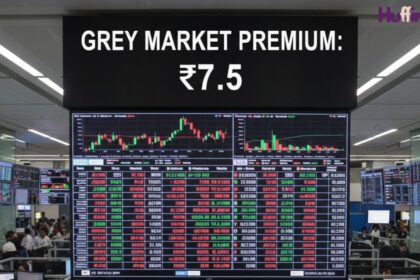




Global stock markets experienced heightened market volatility as investors reacted to a fresh wave of economic signals that raised new questions about growth, inflation, and the future direction of interest rates. Equity markets across Asia, Europe, and the United States posted mixed movements, reflecting cautious sentiment rather than a clear risk-on or risk-off trend.
Analysts said the uneven performance highlights growing uncertainty over how long restrictive monetary policies will remain in place and whether global economic momentum can be sustained in the coming quarters.
Equity Markets React to Mixed Economic Signals
Markets opened the day under pressure in parts of Asia after data pointed to slowing manufacturing activity in several major economies. European equities later struggled to find direction as investors digested inflation updates and corporate earnings guidance.
In the United States, stock futures fluctuated as traders weighed stronger-than-expected labor data against concerns that central banks may delay interest rate cuts. This balancing act has become a defining feature of current investor sentiment.
Global Stock Markets and Investor Sentiment
The mood across equity markets remains cautious, with many investors reluctant to make aggressive bets ahead of key economic releases. Portfolio managers say markets are highly sensitive to even small data surprises, which can trigger sharp intraday swings.
Market Volatility Driven by Policy Uncertainty
Persistent market volatility is being driven largely by uncertainty around monetary policy. While inflation has cooled in several regions, policymakers continue to signal that rates may stay higher for longer to ensure price stability.
This has kept pressure on interest-rate-sensitive sectors such as technology, real estate, and consumer discretionary stocks, while defensive sectors have shown relative resilience.
Corporate Earnings Add to Uneven Market Moves
Earnings reports have provided limited clarity, with results varying widely across sectors. Some multinational companies have reported stable demand and improving margins, while others warned of slower growth and cautious consumer spending.
Investors are paying close attention to forward guidance, viewing it as a key indicator of how companies are navigating higher borrowing costs and geopolitical uncertainty.
Global Factors Weigh on Market Confidence
Beyond domestic data, global factors are also influencing trading behavior. Ongoing geopolitical tensions, supply-chain risks, and currency fluctuations have added layers of complexity to investment decisions.
Emerging markets, in particular, remain sensitive to shifts in US interest rate expectations, as capital flows often react quickly to changes in global financial conditions.
Role of Central Banks Remains Central
Central banks continue to play a dominant role in shaping market expectations. Officials from major economies have reiterated that policy decisions will remain data-dependent, reinforcing uncertainty around the timing of any easing cycle.
According to Reuters’ market coverage, investors are increasingly focusing on inflation trends and employment data to assess whether central banks can begin easing policy without reigniting price pressures.
What Investors Are Watching Next
Market participants are now closely watching upcoming inflation reports, central bank speeches, and economic growth forecasts. Any deviation from expectations could prompt renewed volatility across asset classes.
Analysts caution that short-term market swings may continue until there is clearer evidence that inflation is firmly under control and growth is stabilizing.
Outlook Remains Cautiously Balanced
Despite recent turbulence, many strategists believe global equity markets remain supported by resilient labor markets and steady corporate balance sheets. However, they warn that patience and selective positioning are essential in the current environment.
As economic signals continue to evolve, global stock markets are likely to remain sensitive to data and policy cues, keeping volatility elevated in the near term.
Related: Indian Stock Market Emerging Sectors: Why Investors Are Looking Beyond the Nifty 50
Related: Indian Stock Market Today: Volatility Jolts Sensex and Nifty, Testing Investor Confidence