


The global auto industry is entering a period of reassessment as signs of an electric vehicle demand slowdown prompt major carmakers to rethink production timelines, investment priorities, and long-term strategy. After years of rapid growth driven by government incentives and climate targets, the pace of EV adoption has moderated in several key markets.
Industry leaders say the shift does not signal the end of electric mobility, but rather a more complex and uneven transition than previously anticipated.
Electric Vehicle Demand Shows Signs of Cooling
Automakers across North America and Europe have reported slower growth in EV sales compared with earlier forecasts. Rising vehicle prices, concerns over charging infrastructure, and higher borrowing costs have made consumers more cautious, especially in price-sensitive segments.
In some markets, incentives that once boosted sales have been reduced or phased out, adding to uncertainty around near-term demand. Analysts note that while interest in electric mobility remains strong, purchasing decisions are increasingly influenced by affordability and practicality.
Global Auto Industry Adjusts to EV Market Slowdown
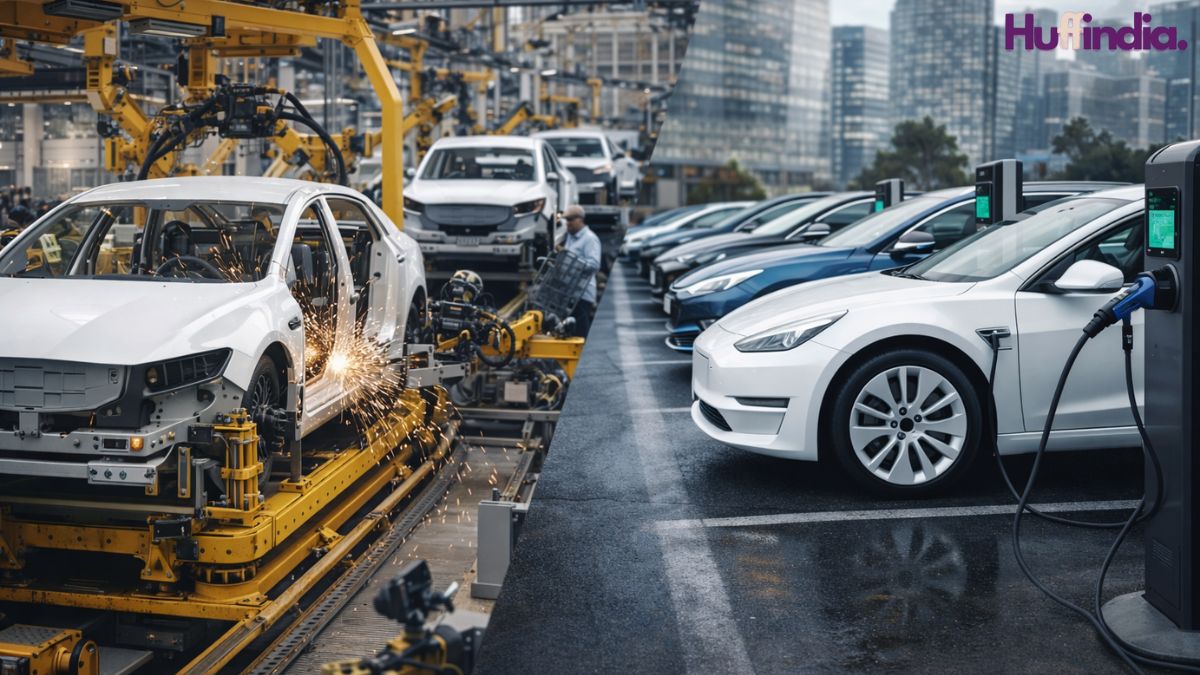
The EV market slowdown has led manufacturers to delay factory expansions, scale back production targets, and reconsider the balance between electric, hybrid, and traditional combustion models. Several major carmakers have emphasized flexibility, signaling that future product lines will reflect regional demand rather than a one-size-fits-all approach.
Carmakers Strategy Shift Reflects Market Reality
This carmakers strategy shift reflects a growing recognition that the transition to electric vehicles will unfold at different speeds worldwide. While some countries continue to push aggressively toward electrification, others are adopting a more gradual approach.
Hybrid vehicles, in particular, are regaining attention as a bridge technology that offers lower emissions without the full infrastructure demands of EVs.
Cost Pressures and Supply Chain Challenges
Rising raw material costs, especially for batteries, have added pressure to automakers’ margins. Although prices for key inputs have eased from recent peaks, long-term supply security remains a concern as demand for critical minerals continues to grow.
Supply chain disruptions, while less severe than in previous years, have also highlighted the need for more resilient manufacturing networks. Automakers are increasingly diversifying suppliers and localizing production to reduce risk.
Regional Differences Shape Automotive Trends
The pace of change varies significantly by region. China remains the world’s largest EV market, supported by domestic manufacturers and strong policy backing. In contrast, adoption in parts of Europe and North America has slowed as consumers weigh cost considerations.
Emerging markets present both opportunities and challenges, as infrastructure gaps and affordability concerns limit widespread EV adoption in the short term.
According to Reuters’ automotive industry coverage, several global manufacturers are now prioritizing profitability and operational discipline over aggressive expansion targets.
Long-Term Outlook Remains Intact
Despite current headwinds, industry experts stress that the long-term trajectory toward electrification remains unchanged. Governments continue to set emissions targets, and technological advances are expected to improve battery efficiency and reduce costs over time.
However, the current slowdown serves as a reminder that consumer behavior, infrastructure readiness, and economic conditions play critical roles in shaping adoption curves.
What Comes Next for the Auto Industry
In the months ahead, automakers are likely to focus on product diversification, cost control, and regional customization. Partnerships with battery suppliers, charging providers, and technology firms will also be central to future strategies.
As the global auto industry navigates this transitional phase, success will depend on adaptability, balancing innovation ambitions with market realities in a rapidly evolving mobility landscape.
Related: Empowering Growth: Indian EV Battery Startups Shine
Related: Tata Avinya EV Explained: Design, Platform, Features and Expected Launch