
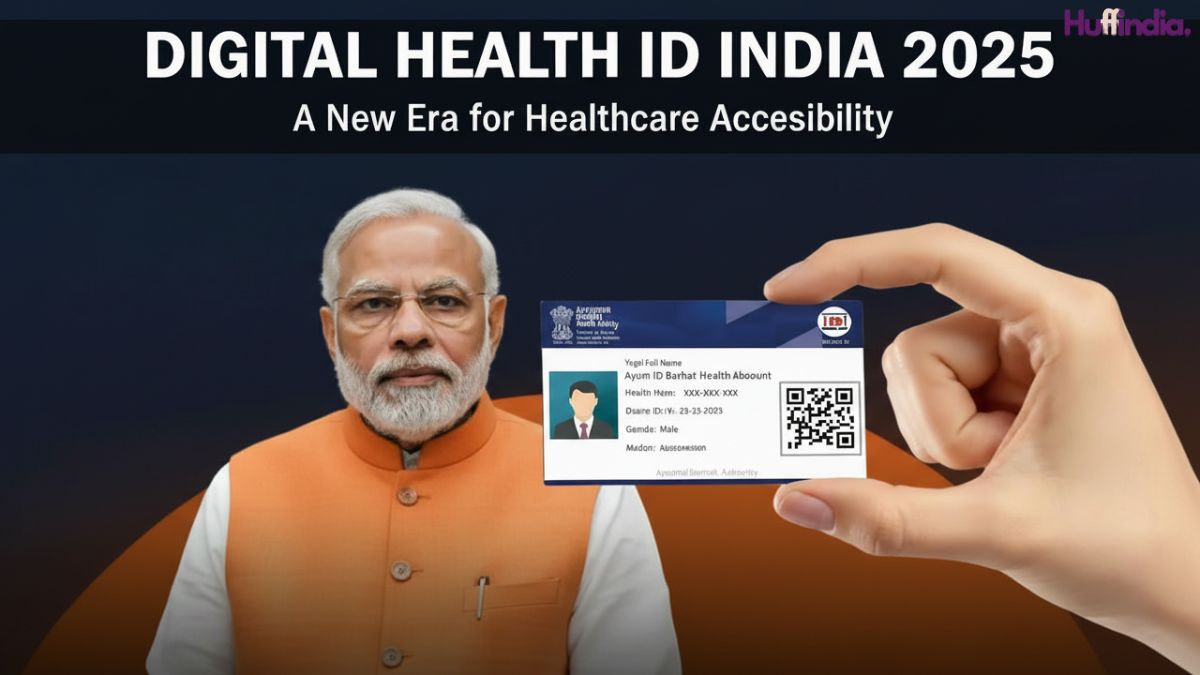



In a landmark move poised to reshape India’s public health landscape, the government today announced the launch of Digital Health ID India 2025 — a nationwide, secure, digital health-record and identity system designed to ensure every citizen has access to unified medical history, prescriptions, lab reports, and hospital records in one place.
According to the health ministry, the Digital Health ID India 2025 initiative aims to:
- Simplify access to medical records across hospitals nationwide
- Speed up emergency medical treatment
- Reduce paperwork and repetitive diagnostics
- Enhance transparency and patient safety
- Enable better health analytics and policymaking
For millions of citizens — from remote villages to urban centers — this new system promises a major leap forward in healthcare access and efficiency.
What Is Digital Health ID India 2025 — How Will It Work?
Under the new plan:
- Every citizen gets a unique Health ID, linked to their biometric or Aadhaar credentials
- Medical records — doctor visits, prescriptions, lab results, imaging reports — get digitized and securely stored in a centralized, encrypted database
- Hospitals and clinics across public and private sectors will be connected via a secure network
- Patients can show their Health ID at any medical facility to instantly retrieve their records
This ensures ease of transfer between cities or states — essential for migrants, travelers, and people with chronic diseases.
Why Digital Health ID India 2025 Is a Game-Changer for Healthcare in India
Reduced Red Tape and Faster Treatment
With Digital Health IDs, patients no longer need to carry physical records or repeat expensive diagnostic tests. In emergencies, doctors get instant access to history, allergies, ongoing medication — saving critical time.
Saving Money & Preventing Medical Errors
Duplicate tests cost patients time and money. The digital system reduces redundancy, streamlines treatment, and avoids harmful medical errors due to missing history.
Better Data for Policy & Public Health Planning
Aggregated anonymised data from the Digital Health ID programme can help identify disease trends and public-health risks and plan vaccination or prevention campaigns more effectively.
Privacy & Data Security — Critics Raise Concerns Over Digital Health IDs
With great power comes great responsibility. Several experts and privacy advocates have raised valid questions about:
- Data security and risk of leaks
- Consent and patient control over records
- Potential misuse by third parties (insurers, employers)
- Digital divide — will remote areas with poor internet get equal access?
The government assures all data will be encrypted end-to-end, with strict access control, patient consent protocols, and compliance with data-protection standards. A national oversight body will be established for complaints and breaches.
For insights on global health-data privacy, refer here:
What Citizens Should Do to Enroll for Digital Health ID India 2025
- Visit authorized health centres or use the official portal/app
- Upload identity proof (Aadhaar, national ID, etc.)
- Provide basic health and demographic details
- Accept consent terms for secure data storage
- Receive your unique Health ID — printable card + digital copy
The government plans a nationwide rollout in phases — pilot cities first, gradually expanding to all states by mid-2026.
Conclusion
The launch of Digital Health ID India 2025 could mark a turning point for public healthcare — offering modern, efficient, and accessible health services for all. If executed carefully, with strong data security and inclusive access, this initiative could transform how Indians approach health — reducing burden, improving care, and bringing everyone under a common health safety net.
Related: Winter COVID Spike 2025 Triggers Urgent Government Alert as Delhi & Mumbai Face Alarming Surge
Related: Why Antibiotic Resistance in India Is Now a Critical Public Health Crisis