
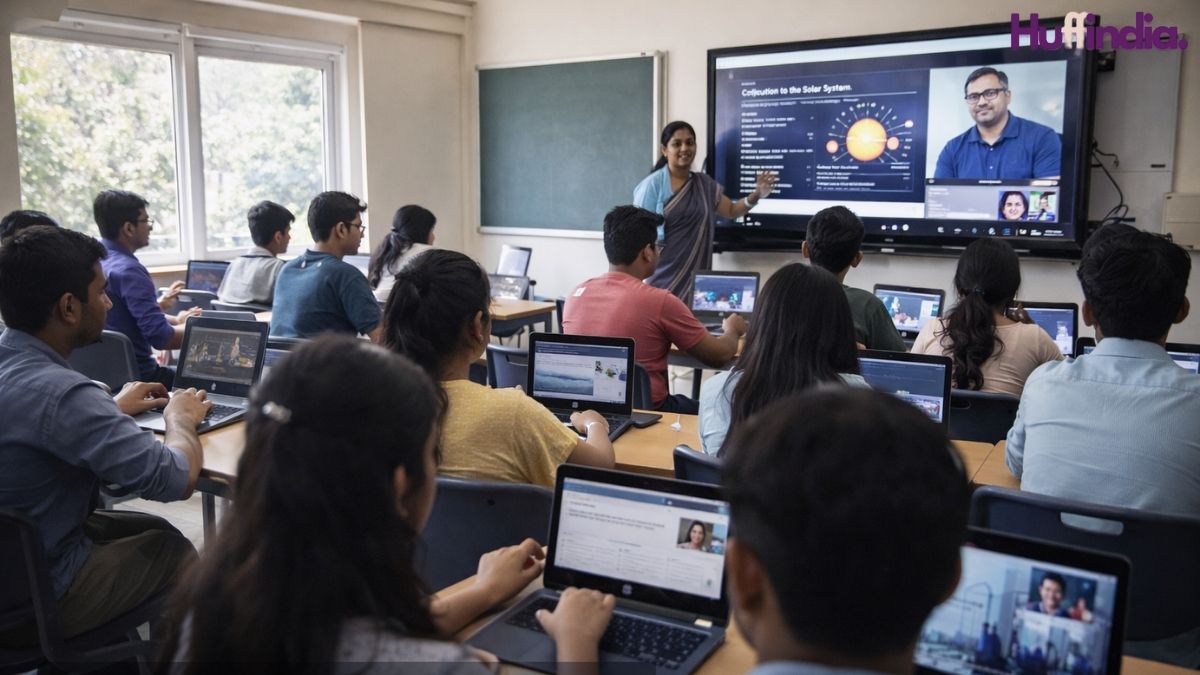



Digital education in India is gaining momentum as schools, colleges, and universities increasingly adopt online learning platforms and technology-enabled teaching models. Education officials and academic institutions say the shift reflects a long-term transformation rather than a temporary response, with digital tools now becoming a core part of India’s education ecosystem.
The expansion comes amid growing demand for flexible learning, improved access to quality education, and efforts to bridge regional disparities in teaching resources.
Online Learning Becomes a Mainstream Tool
The use of online learning in India has moved beyond emergency remote education into structured academic programs. Schools are integrating digital content into daily lessons, while higher education institutions are offering blended courses that combine classroom instruction with virtual modules.
Teachers report that recorded lectures, interactive quizzes, and digital assessments are helping personalise learning and track student progress more effectively.
Digital Education in India Shapes Modern Classrooms
The rise of digital education in India is reshaping classroom dynamics through hybrid classrooms, where physical teaching is supported by digital platforms. Smart boards, learning management systems, and virtual labs are increasingly common in urban schools and colleges.
Education Technology India Supports Access and Scale
Advances in education technology India have enabled institutions to reach students in remote and underserved areas. Government-backed platforms and private edtech providers are expanding course offerings in regional languages, improving inclusivity.
Officials say digital tools are particularly valuable for skill-based education, teacher training, and competitive exam preparation.
Government Policy and Institutional Support
The government has emphasized technology-led education reforms as part of broader education policy initiatives. Investments in digital infrastructure, teacher training, and content development aim to ensure that institutions can adopt new tools effectively.
Education authorities have also stressed the importance of maintaining academic standards and data privacy as digital adoption grows.
Challenges in Implementation Remain
Despite progress, challenges persist. Unequal access to devices, internet connectivity gaps, and varying digital literacy levels continue to affect adoption, particularly in rural areas. Teachers also face the task of balancing screen time with traditional learning methods.
Experts caution that digital education should complement, not replace, in-person learning, especially for younger students.
Impact on Students and Teachers
Students benefit from flexible schedules, self-paced learning, and wider course choices. However, educators highlight the need for structured guidance to ensure engagement and academic discipline.
Teacher training programs are increasingly focusing on digital pedagogy, assessment methods, and classroom management in hybrid settings.
According to coverage of India’s education reforms and technology adoption, sustained investment and policy clarity will be crucial to ensuring equitable outcomes.
The Road Ahead
Education experts believe digital learning will continue to expand, particularly in higher education and vocational training. The future focus will be on quality, accessibility, and effective integration of technology into curricula.
As digital education in India evolves, policymakers and institutions face the challenge of ensuring that innovation enhances learning outcomes without widening existing inequalities.
Related: Global Education Systems Strain to Address Post-Pandemic Learning Gaps
Related: Innovative Futures: Virtual Reality Classrooms in India