
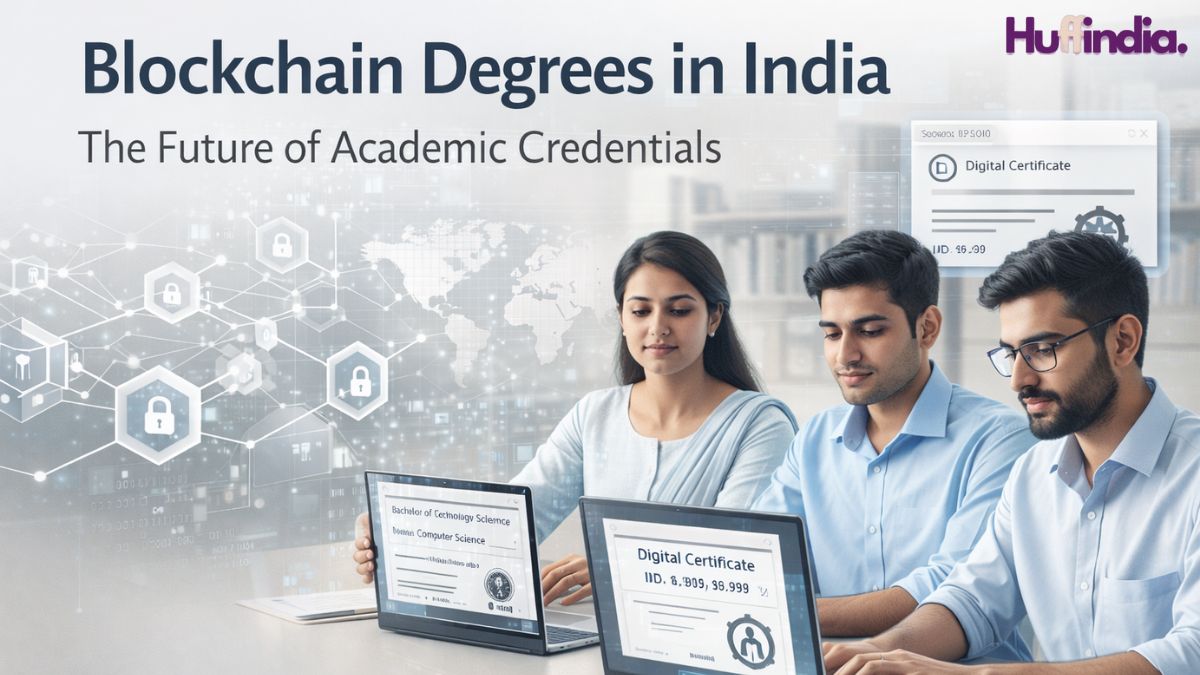



Blockchain degrees in India are emerging as a new and largely unexplored development in higher education, as universities and training institutions begin experimenting with digital credentials secured through blockchain technology. While still in early stages, the shift has the potential to change how academic qualifications are issued, verified, and recognised—both in India and globally.
As concerns around fake certificates, lengthy verification processes, and cross-border credential recognition grow, blockchain-based academic records are gaining attention from educators and policymakers alike.
What Are Blockchain-Based Degrees?
A blockchain degree is a digitally issued academic credential recorded on a decentralised ledger. Unlike traditional paper certificates, blockchain credentials are tamper-resistant, instantly verifiable, and accessible online.
In practice, students receive a secure digital certificate that employers, universities, or verification agencies can authenticate without contacting the issuing institution. Supporters say this system could significantly reduce fraud and administrative delays.
In the Indian context, blockchain degrees in India are being explored primarily for higher education, skill certifications, and professional training programmes.
Why Indian Institutions Are Exploring Blockchain Credentials
India produces millions of graduates every year, creating enormous pressure on verification systems. Employers often face delays in confirming academic records, while institutions spend resources responding to verification requests.
Education experts argue that digital credentials India could simplify this process by creating a trusted, permanent academic record for students. Blockchain technology also allows credentials to be recognised internationally without repeated validation, an advantage for students seeking global opportunities.
Several private universities and edtech platforms have already begun pilot programmes issuing blockchain-secured certificates for specialised courses.
Impact on Students and Employers
For students, blockchain-based degrees offer portability and long-term security. Digital credentials cannot be lost, damaged, or altered, making them especially useful for professionals who change jobs or countries frequently.
Employers benefit from faster and more reliable verification processes. In sectors such as IT, finance, and healthcare—where qualification authenticity is critical—blockchain credentials could improve hiring efficiency and trust.
Analysts believe this development aligns closely with the future of education India, where technology-driven transparency becomes central to academic credibility.
Role of Government and Policy Frameworks
While adoption is still limited, policymakers are increasingly examining blockchain applications beyond finance and cryptocurrency. Education authorities have discussed the potential use of blockchain for academic records, scholarships, and examination systems.
However, large-scale implementation would require clear standards, interoperability between institutions, and strong data protection safeguards. Experts caution that technology alone cannot solve governance issues without robust regulatory frameworks.
Challenges and Concerns
Despite its promise, blockchain adoption in education faces hurdles. Technical infrastructure, awareness among institutions, and integration with existing systems remain challenges.
There are also concerns around accessibility. Without proper planning, education technology India initiatives risk widening digital gaps between institutions with resources and those without.
Privacy is another key issue. While blockchain records are secure, ensuring that students retain control over who accesses their credentials will be critical to building trust.
Global Perspective
Globally, universities in Europe, the United States, and Asia have begun issuing blockchain-based diplomas and micro-credentials. These initiatives aim to improve international recognition and lifelong learning pathways.
For global best practices on digital credentials and education innovation, resources from the World Economic Forum provide useful insights:
India’s approach is likely to evolve cautiously, balancing innovation with scale and inclusion.
What Lies Ahead
As India expands its digital public infrastructure, blockchain-based education records could eventually integrate with broader digital identity systems. If implemented responsibly, the technology may reduce fraud, enhance global mobility, and modernise academic administration.
For now, blockchain degrees in India remain a niche development—but one with the potential to reshape higher education quietly and permanently.
Related: Smart Cities Mission India: How Data Is Transforming Urban Governance
Related: Global Internet Outage Deepens After Red Sea Cable Damage