

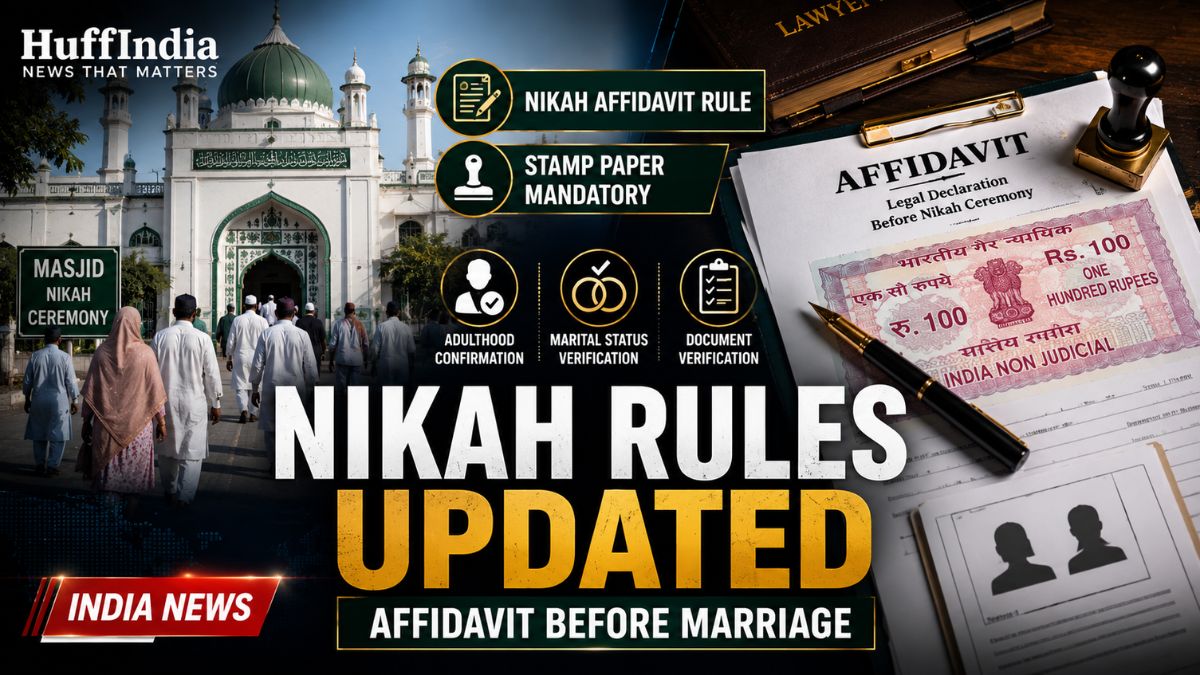
Baghpat nikah affidavit rule has sparked discussion after a mosque in Uttar Pradesh introduced a new requirement asking couples to submit a lawyer-prepared declaration on stamp paper before a nikah (Islamic marriage) can be solemnised. Religious leaders behind the decision say the measure is intended to improve transparency, protect all parties involved and reduce disputes arising after marriage.
According to recent reports, the declaration will require both the bride and groom to confirm that they are legally adults, that neither is concealing an existing marriage, and that the information provided for the nikah is accurate. The initiative has reportedly been adopted at a mosque in Baghpat following discussions among local ulema and community representatives.
What Is the Baghpat Nikah Affidavit Rule?
Under the Baghpat nikah affidavit rule, both families must submit an affidavit prepared by a lawyer and executed on non-judicial stamp paper before the marriage ceremony.
The declaration is expected to confirm several key legal facts, including:
- Both individuals have attained the legal age for marriage.
- Neither party is concealing an existing marriage.
- Personal details submitted for the nikah are accurate.
- No material facts have been intentionally withheld.
Religious leaders associated with the decision say the objective is to create greater legal clarity before the marriage is solemnised rather than alter the religious procedure itself.
Why Was the Rule Introduced?
Community leaders said the decision followed instances where disputes reportedly arose after nikah ceremonies because of concealed marriages, questions regarding age or pending legal matters.
According to those involved, introducing a written declaration is intended to reduce such disputes and provide additional assurance to both families before the marriage takes place.
The organisers have presented the requirement as a preventive measure aimed at promoting transparency rather than restricting marriages.
What Will the Affidavit Contain?
As reported, the affidavit will be prepared through a legal practitioner and submitted before the ceremony.
It is expected to include declarations relating to:
- Legal age of the bride and groom.
- Current marital status.
- Accuracy of identity and personal information.
- Confirmation that no relevant facts have been intentionally concealed.
Community representatives believe that documenting these details could help reduce future legal and family disputes arising from incorrect or incomplete information.
Community Discussion Around the Decision
The Baghpat nikah affidavit rule has generated discussion within the community and on social media.
Supporters argue that written declarations may strengthen accountability and help protect the rights of both parties by ensuring important legal details are confirmed before marriage.
Others note that the initiative appears to be a local decision and should not be interpreted as a statewide or nationwide legal requirement. At present, there has been no announcement indicating that the practice has been adopted across all mosques or by any government authority.
Also Read | Indian Women Traditional Jewellery: Hidden Meaning of Nose Rings, Anklets and Toe Rings
Is It a Government Rule?
No.
Based on currently available information, the Baghpat nikah affidavit rule is a local initiative introduced by a mosque following consultations among religious leaders. It is not a new law enacted by the Uttar Pradesh government or Parliament.
Marriage laws and legal registration requirements continue to be governed by the applicable laws of India. The reported affidavit requirement is an additional condition introduced by the concerned mosque before conducting the nikah ceremony.
For official district information and public administration updates, readers can visit the Baghpat District Administration website.
Final Words
The Baghpat nikah affidavit rule reflects an effort by local religious leaders to increase transparency and reduce disputes by requiring legal declarations before nikah ceremonies.
Supporters view the move as a safeguard against issues such as concealed marriages, incorrect personal information and age-related disputes, while its broader adoption remains to be seen. As discussions continue, the initiative has highlighted the growing emphasis on combining religious practices with greater legal documentation and accountability.