
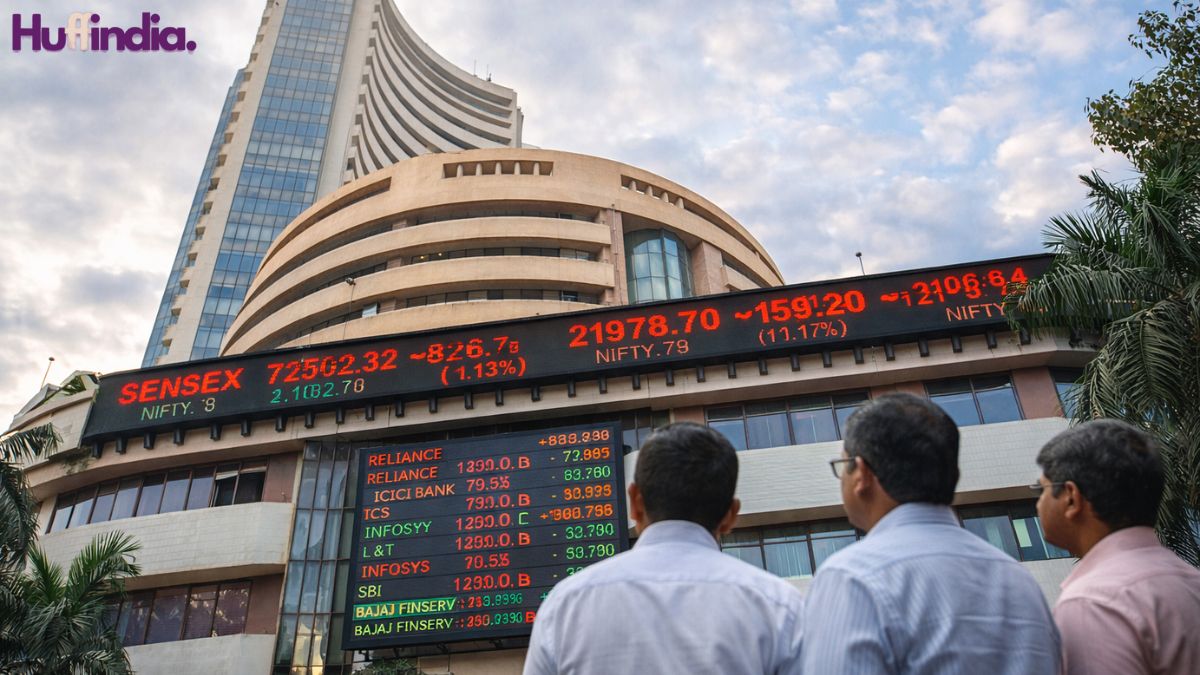



Mumbai: The Indian stock market volatility on 5 March intensified on Thursday as investors on Dalal Street reacted cautiously to rising geopolitical tensions and mixed global cues. Benchmark indices BSE Sensex and Nifty 50 witnessed sharp swings during trading, reflecting nervous sentiment among investors.
Market participants said that uncertainty in global markets and concerns over crude oil supply disruptions triggered a cautious approach among traders.
The Sensex Nifty market update showed that both indices moved in a narrow range through most of the trading session before witnessing late-session fluctuations.
Global Developments Trigger Market Nervousness
Analysts said that the latest global tensions stock market concerns are largely linked to developments in the Middle East and fluctuations in international crude oil prices.
India, being one of the world’s largest oil importers, remains particularly sensitive to energy price movements. Rising crude oil prices can increase inflation and impact corporate profitability, leading investors to reassess their positions.
Experts noted that uncertainty in global markets often triggers temporary volatility in emerging markets, including India.
“Markets are currently reacting to global developments and profit-booking after a recent rally,” said a Mumbai-based market strategist.
Banking and IT Stocks Show Mixed Trends
Sector-wise performance reflected the broader uncertainty across markets. Banking stocks showed mild recovery during the afternoon session, while IT stocks traded with mixed momentum.
Shares of major banking companies helped cushion some of the early losses, although selling pressure remained visible in several mid-cap and small-cap stocks.
Analysts said that the Indian equity market outlook remains fundamentally strong despite short-term fluctuations.
Domestic factors such as government infrastructure spending, rising consumption demand, and strong corporate earnings continue to support long-term investor confidence.
Experts See Possible Relief Rally
Despite the recent Indian stock market volatility on 5 March, technical analysts believe that markets could witness a short-term rebound.
Market charts indicate that several stocks are currently trading near oversold levels, which historically increases the chances of a relief rally.
However, experts advise investors to remain cautious and focus on fundamentally strong companies rather than reacting to short-term market movements.
“Volatility is part of the market cycle. Investors with long-term horizons should not panic,” said a senior equity strategist.
Retail Investors Urged to Avoid Panic Selling
With market swings becoming more frequent in recent sessions, financial advisors are urging retail investors to avoid panic selling.
Investment planners recommend sticking to long-term financial goals and maintaining diversified portfolios to manage risk during volatile periods.
According to market analysts, corrections often present opportunities for disciplined investors to accumulate quality stocks at attractive valuations.
More insights on Indian equity market data and trading updates can be accessed on the official website of the Bombay Stock Exchange:
https://www.bseindia.com
Long-Term Outlook Remains Positive
While short-term fluctuations may continue, analysts believe the broader trajectory of India’s stock market remains positive.
India’s strong economic growth outlook, expanding middle class, and continued foreign investment interest are expected to support the equity market in the long run.
As investors monitor global developments and domestic economic signals, the coming weeks could determine whether Dalal Street stabilises or continues to experience volatility.
Related: Sensex Today February 26 Opens Higher, Banking Stocks Lead
Related: Global Stock Markets Face Volatility as Investors Await Key Economic Signals