
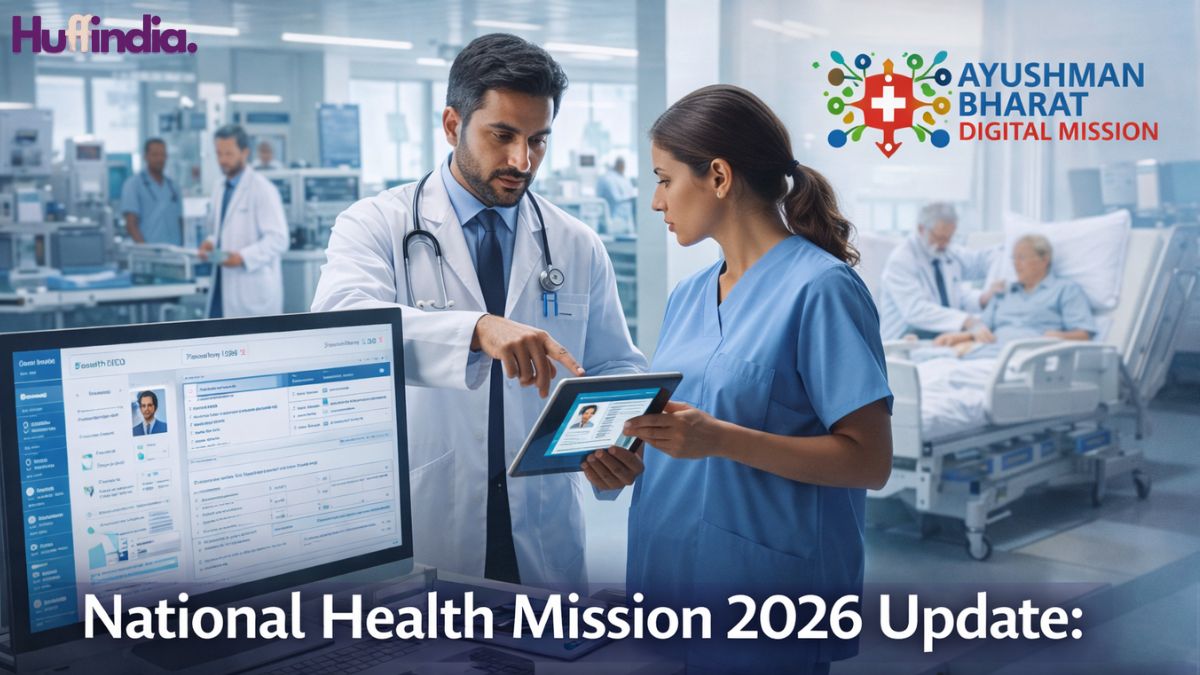



The National Health Mission 2026 update highlights a major expansion of digital health records across multiple states as part of the government’s ongoing effort to strengthen primary healthcare delivery.
Officials from the Ministry of Health and Family Welfare confirmed that the National Health Mission 2026 update includes accelerated integration of electronic health records (EHRs) at district hospitals and community health centres.
The initiative aims to improve patient data accessibility, reduce duplication of tests and streamline service delivery across public healthcare facilities.
National Health Mission 2026 Update: Focus on Digital Integration
Under the latest National Health Mission 2026 update, states have been directed to expand the Ayushman Bharat Digital Mission framework to additional rural and semi-urban health facilities.
Health authorities said digitised patient records will help ensure continuity of care and enable better monitoring of chronic illnesses.
According to information available on the official Ministry of Health website (https://mohfw.gov.in), digital health systems are being aligned with national health ID protocols.
Public health expert Dr. Meenal Rao said:
“The National Health Mission 2026 update marks a significant shift toward data-driven healthcare planning and improved transparency.”
Strengthening Primary Healthcare Infrastructure
Beyond digitalisation, the National Health Mission 2026 update also outlines steps to enhance staffing levels at primary health centres.
Officials confirmed that recruitment drives are underway in several states to fill vacancies for doctors, nurses and community health officers.
Mobile medical units and telemedicine platforms are being scaled up to improve outreach in remote regions.
The expansion aligns with broader goals of achieving universal health coverage.
Impact on Rural and Urban Healthcare
The National Health Mission 2026 update is expected to have a significant impact on rural healthcare delivery, where record-keeping has traditionally been manual.
Digital records will allow patients to access medical history across facilities, reducing paperwork and wait times.
Urban health centres are also being upgraded with improved IT infrastructure and training programs for staff.
Health economists suggest that digital systems may enhance efficiency and reduce long-term administrative costs.
Budget Allocation and Policy Framework
Officials stated that additional funding has been allocated under the current financial year to support the National Health Mission 2026 update.
The programme continues to prioritise maternal and child health services, immunisation coverage and disease surveillance.
Policy analysts note that improved data collection will help identify public health gaps and allocate resources more effectively.
Expert Perspective
Healthcare policy analyst Dr. Ritu Sharma said:
“The National Health Mission 2026 update reflects a broader push toward digital governance in healthcare. Successful implementation will depend on training, cybersecurity safeguards and infrastructure reliability.”
She added that data privacy protections must remain central to digital health initiatives.
What Comes Next?
The government indicated that periodic reviews will assess progress under the National Health Mission 2026 update framework.
States are expected to submit implementation reports detailing digital onboarding progress and infrastructure readiness.
As India’s healthcare system continues modernisation efforts, the National Health Mission 2026 update signals a move toward integrated, technology-enabled service delivery.
Further developments are anticipated as additional states complete system integration phases in the coming months.
Related: Respiratory Illness India January 27 2026: Winter Surge Triggers Fresh Health Warning
Related: Lifestyle Diseases in India: Why Doctors Are Warning of a Silent Health Crisis